« Previous PageNext Page »


Hooray for Hollywood!

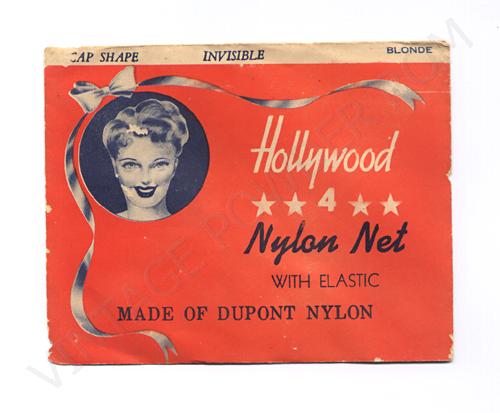
I wish that this hair net package was in better shape, but they can’t all be perfect. I know that condition is crucial when you’re collecting, yet sometimes it doesn’t matter very much to me. I feel especially protective of the packages and boxes that are worn, and often the ones in rough and fragile condition are the only examples of certain designs that I’ve been able to locate. Regardless of their condition, I treat each addition to my collection as a treasured artifact from the past which deserves to be carefully and lovingly preserved.

The Hollywood Hair Net package is from the 1940s, and the bright red color, along with the four stars, brings to my mind Hollywood’s part in the war effort. The woman depicted on package looks like a starlet awaiting her big break, biding her time as a hostess in the Hollywood Canteen.
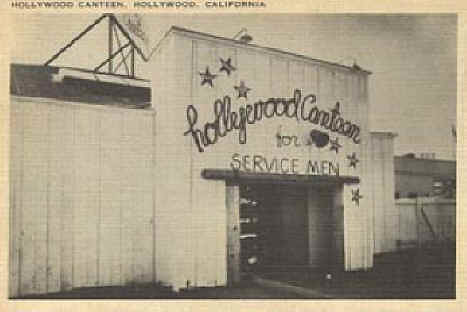
The stars would never shine as brightly as they did when they were doing their bit for servicemen, and women, from all over the globe.  The Hollywood Canteen was the war time passion of Bette Davis, John Garfield, and Jules Stein. Miss Davis served as president, and Mr. Stein, President of Music Corporation of America, headed up the finance committee.

By the time the Canteen opened its doors On October 3, 1942, over 3000 stars, players, directors, producers, grips, dancers, musicians, singers, writers, technicians, wardrobe attendants, hair stylists, agents, stand-ins, publicists, secretaries, and allied craftsmen of radio and screen had registered as volunteers.

If you were a U.S. serviceman, or woman, or a member of the allied forces your uniform was your ticket to a star studded evening.  Imagine the morale boost a solider would get when he was served coffee by Marlene Dietrich or Betty Grable!
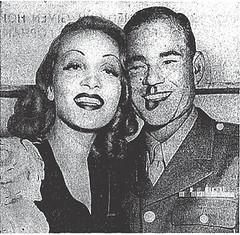
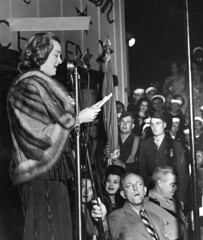
Here is a photo of lipstick smeared Sgt. Carl E.W. Bell with Marlene Dietrich. Bell was the one millionth solider to visit the Canteen! It’s amazing that it took the Canteen less than one year to host one million servicemen. That’s a lot of coffee and donuts.

Servicemen could not only eat, socialize, and star gaze at the Canteen, they were treated to the best live entertainment that Hollywood had to offer.  The roster of entertainers was a “who’s who” of radio and movie talent: Bud Abbott and Lou Costello, Lauren Bacall, Humphrey Bogart, Rita Hayworth, Bob Hope, and many more.

One of the most spirited sister acts ever to boogie woogie across a stage, and a favorite of war time audiences, was the Andrews sisters. Patty, Maxine, and LaVerne travelled and performed for the troops throughout the war.  Watch them perform, “I’m Gettin’ Corns for My Country” at the Canteen. I would have loved to have been in the audience on that night.

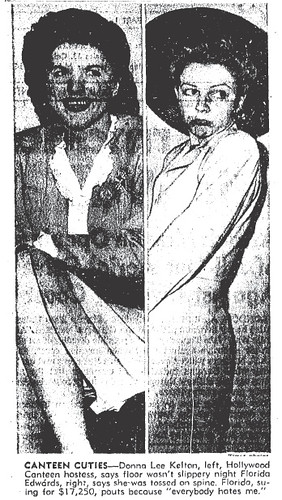
Many of the hostesses at the Canteen loved to jitterbug, but not every one of them was hep to the jive. Sometime during the evening of October 31, 1942, an overly enthusiastic Marine grabbed the hand of a hostess lieutenant, Florida Edwards, and began to spin her around the dance floor.  Florida yelled for help, but none was forthcoming. The jiving Marine spun his unwilling partner so hard that she became airborne and landed with a crash on her spine on the hard floor.  Florida was laid up for a month, and then decided to sue the Canteen for $17,250 in damages. The case would become a battle of the swing experts.
But before we go any further, let’s get hep to some hipster slang from the era.

Hep cat (n.) — a guy who knows all the answers, understands jive

Icky (n.) — one who is not hip, a stupid person, can’t collar the jive.

Jitterbug (n.) — a swing fan

Florida Edwards admitted in open court that she was an icky. She told Judge Henry Willis that “Jitterbugging is a very peculiar dance. Personally I don’t like it. It reminds me of the jungle antics of natives. There is a basic step, and then there are variations. It’s the most ungraceful dance I’ve ever seen. They whirl you. They pick you up. They throw you down.”

“Did you just stand still when you told him you didn’t jitterbug?” queried the Canteen’s Attorney Walter Schell.

“Well, you don’t stand still with a jitterbug. They don’t let you,” explained Miss Edwards to the attorneys and judge who had never witnessed jitterbugging.

Judge Willis wanted to know if the jitterbugs drank. “No”, replied Florida, “They’re usually sober. They’re just crazy.”
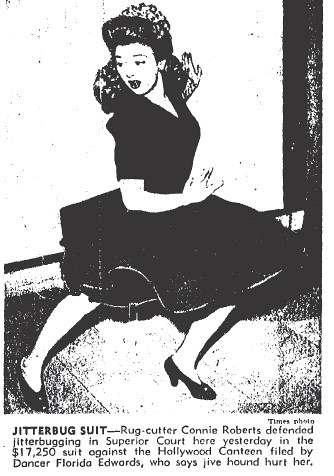
In dispute was how much control a woman had once she had been thrown into a spin. Florida’s friend Luise Walker, floor manager of the Canteen, stated that once a woman was in a spin she was in trouble. Luise compared a spin to a boomerang or “English on a golf ball”.

Rug-cutter and jive expert for the Canteen, Connie Roberts, (see photo) refuted Luise’s testimony, and in a demonstration she walked away unharmed from a spin.

Testimony and jitterbug demonstrations notwithstanding, Judge Willis declared that the jitterbug was a “weird dance of obscure origins” and awarded Florida Edwards $8170 in damages. The amount wasn’t exactly chump change – $8170 dollars in 1943 had the same buying power as $102,331.38 in current dollars.

In his decision Judge Willis wrote, “In an extra violent spinning of her body as a part of the extravagance of this weird dance, she missed connecting with her partner, due to his losing balance because a table was pushed against him by the crowd on the sidelines.”
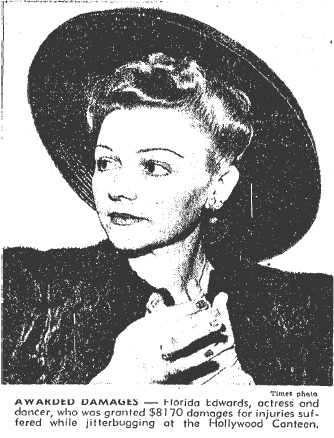
Judge Willis held that the Hollywood Canteen had failed in its duty to furnish Miss Edwards with safe employment and permitted a jitterbug enthusiast to “indulge in his ‘crazy idea’ of dancing with the plaintiff as the helpless victim.”

I was curious enough about Florida to see if she ever again appeared in the news.

Sure enough on January 27, 1944 a notice appeared in the Los Angeles Times announcing the marriage of Miss Florida Edwards, actress, to J.C. Lewis a radio producer and author of the musical score for the service show “Hey Rookie”.

The pair was married at the Hotel Frontier.  In attendance at the wedding was the groom’s sister, Diana Lewis who was married to “Thin Man” William Powell.

Sounds like Florida landed on her feet.
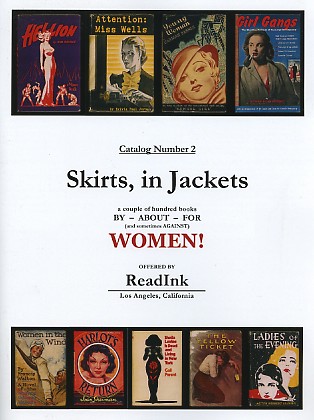
When I’m not writing about women, I’m reading about them; so, I was delighted when I received the latest catalog from ReadInk entitled: “Skirts, in Jackets”.

I’ve been poring over it for days now and there is so much to see (and desire). There are books from different eras covering topics ranging from flappers to girl gangs in the 1950s. As a woman who has purchased books strictly for their dust jackets, I’m having a difficult time deciding which of the glorious tomes I want to have grace my nightstand.

Oh, and the titles are simply amazing — “Ladies of the Evening”, “Women in the Wind”, “Yesterday’s Sin”. 

Sigh.

You may order a hard copy of the catalog and/or view it online. Don’t wait — these are some restless dames!


Good news, ladies. Mon Cheri products are on sale at The Owl Drug Co — or at least they were in November 1925.

I want to express my thanks to those of you who attended my lecture last Sunday in the historic Egyptian Theater in Hollywood.  The lecture was co-hosted by the Los Angeles Art Deco Society, and American Cinematheque, and was followed by a screening (with LIVE musical accompaniment provided by pianist Robert Israel) of the 1927 film “It”, starring Clara Bow.

Here’s a clip from the film:


Clara sure had “It”, and her sassy bob was a major part of her appeal.

Irene Castle

Irene Castle

What about bobbed hair? Did Clara Bow create it? And if she didn’t, who did? There is evidence which suggests that Antek Cierplikowski (aka Mssr. Antoine) may have bobbed the hair of French actress Eva Lavalliere as early as 1909 — but it was dancer Irene Castle who popularized the style in 1914 when she cut her own hair in advance of elective surgery. Irene may have clipped her locks for convenience, but thousands of women were smitten by both the style and the ease of her adorable cropped ‘do and they immediately followed her lead.  Scissors were  soon flying in barbershops all over the U.S.


Irene Castle gave the bob its first little nudge into popular culture, but silent film star Colleen Moore brought the bob to mainstream America in the film “Flaming Youth” in 1923.  Writer  and chronicler of all things flapper,  F. Scott Fitzgerald, said: “I was the spark that lit up Flaming Youth, Colleen Moore was the torch. What little things we are to have caused all that trouble.”

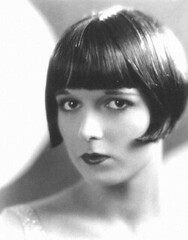
Colleen’s hair was styled in a sweet dutch boy crop; but there was plenty of room for different interpretations of the bob from Clara Bow’s carefree tousled hair, to Louise Brooks’ sleek black helmet.

Louise Brooks

Louise Brooks

Despite their different on- and off-screen personas, all three women epitomized the flapper in general, and the glorified the bob hairdo in particular. The bob has survived to be 100 years old is because it has readily adapted to the whims of fashion.

Bobbed hair was de riguer for flappers, and of course flappers were glorified in film, literature, poetry — all of the arts.  I believe that no single person did more to immortalize the flapper than writer F. Scott Fitzgerald.  And he didn’t just talk the talk — he and his wife Zelda led others of the “Lost Generation” on a decade long party.

Years after the flapper had taken her last illegal drink, and attended her final petting party, Fitzgerald’s short story, “Bernice Bobs Her Hair”, was brought to television by PBS.   The 1976 production starred Shelley Duval (Bernice) and Bud Cort (Warren).  In this clip Bernice asks Warren for his opinion on the hair bobbing issue.

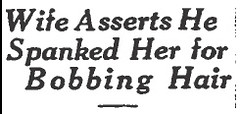
Conversations like the one Bernice and Warren were having on the dance floor, were taking place in thousands of American homes during the 1920s.  The hair bobbing issue was a hot topic and caused broken engagements, divorce, and even the spanking of a wife by her husband!

From our vantage point it may be difficult to believe that something as simple as a haircut could cause so much controversary — we’re accustomed to choosing our personal style with virtually no constraints (and that may not always been a good thing.)

Nevertheless, whether you have long hair, or short, props must be given to the women of the 1920s who paved the way for all of the rest of us — we owe them a debt.


When I’m looking through my collection trying to decide on a subject for a post, I rely on free association.  According to Wikipedia free association is defined as:

 “The method of free association has no linear or preplanned agenda, but works by intuitive leaps and linkages which may lead to new personal insights and meanings. “

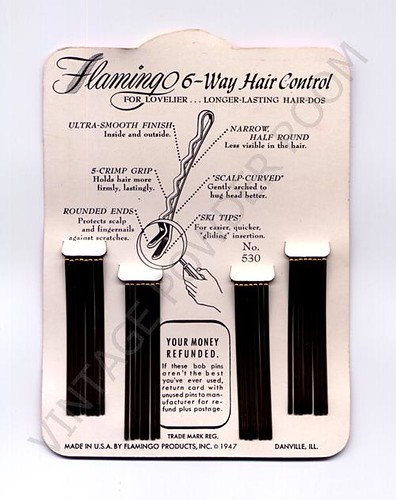
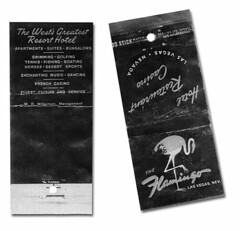
When I picked up the Flamingo hair pin card a few days ago and flipped it over, I saw that it was dated 1947.  The first leap in my free association was to the Flamingo Hotel in Las Vegas, which I’d thought had opened in 1947 (actually it opened in December 1946).  The next few associations I made were easy and seemed to me to be a natural progression: Benjamin “Bugsy” Siegel who was responsible for building the Flamingo Hotel (and was murdered in June 1947), Virginia Hill (Siegel’s mistress, nicknamed “Flamingo”), and last I thought of Elizabeth Short (aka the “Black Dahlia”) who was found murdered in Leimert Park in January 1947.

Someone else may have thought of the lovely pink birds, but that’s just not how my mind works!
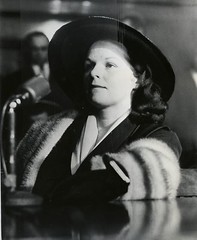
Virginia Hill was a stunner. Red haired, vivacious and headstrong, she was bound to get attention from men.  She was born in Alabama in 1916, and as a teenager she went to Chicago; however,  it’s not clear if she went there to ply her trade as a prostitute at the 1933 World’s Fair, or work there as a dancer.  In any case it was only a matter of time before she’d come to the attention of rich and powerful men looking for a little arm candy.  In Chicago in 1933 the rich and powerful men were primarily mobsters, or politicians.  She met Joseph Epstein, an associate of Jake “Greasy Thumb” Guzik (member of the Capone gang), and then she moved up through the mob hierarchy subsequently becoming mistress to Frank Costello, Frank Nitti, Charles Fischetti, and Joe Adonis.

Virginia testifying at Kefauver hearings.

Virginia testifying at Kefauver hearings.

“She was smart and she knew how to keep her mouth shut,” said Bea Sedway, the wife of mobster Moe Sedway.  Eventually Virginia’s smarts, and her tight lips, led her to become a courier for the mob. She’d deliver funds all over the country, and even make occasional trips to Switzerland with bags of cash for deposit in numbered bank accounts.

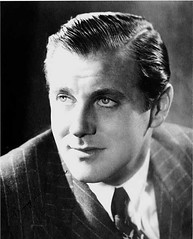
By 1940 Virginia had moved to Los Angeles where she met and fell for married wise guy Benjamin “Bugsy” Siegel.  He would give her the nickname, “Flamingo”. The relationship between the mobster and his mistress was volatile and their fights were legendary.  But they did make a handsome couple – the gorgeous red head and the mobster with the movie star looks.

Ben Siegel

Ben Siegel

Ben had met his match in Virginia.  She couldn’t stop his womanizing, but she knew how to hold his attention in a way that his other lovers did not.  In a situation that could have come out of a Noel Coward comedy, Siegel once had three of his mistresses lodged simultaneously at the Flamingo Hotel: Virginia Hill, Wendy Barrie, and Countess DiFrasso.  Virginia couldn’t abide the Countess and when she discovered that the woman was staying at the hotel she confronted her, and nearly broke her jaw. Virginia was definitely a tough broad. But then living and consorting with mobsters wouldn’t have appealed to a dame with a weaker constitution.

When Siegel became involved in building the Flamingo Hotel in Las Vegas it soon became clear that he wasn’t much of a businessman.  Cost overruns were adding up at a reckless pace. The local contractors were robbing Ben, literally!  They’d heist materials from the job site, and then re-sell them to Siegel at an enormous profit.  While the contractors were stealing from Ben, Ben was stealing from the mob.

The Flamingo opened in December 1946.  The weather was horrendous, and the hotel wasn’t even finished, so crowds of celebrities weren’t beating down the doors to get in. The big opening night was a total bust. Nursing a wounded ego, and fearing that the mob’s multi-million dollar investment in the hotel wouldn’t show a profit, Ben  scurried off to Beverly Hills where he holed up in the house that Virginia rented there on 810 N. Linden Drive. 

On the night of June 20, 1947 Ben would pay the price for his mismanagement of the Flamingo Hotel deal with his life.   As  Siegel sat with his associate Allen Smiley in Virginia’s Beverly Hills home reading the  Los Angeles Times, an unknown assailant fired at him through the window with a .30-caliber military M1 carbine. He was hit several times – twice in the head. No one was charged with the murder, and the crime remains officially unsolved.

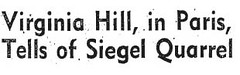
Virginia was in Paris when she received the news of Ben’s death. It’s said that she fainted dead away.  There would always be speculation about Virginia’s possible role in Ben’s assassination.  But it’s highly unlikely that Virginia would have been tipped off about the plan to rub out Siegel, and even more doubtful that she’d have left one of her brothers in his company with the knowledge that a stray bullet could make him collateral damage.  

The truth is that she and Ben had had an argument, and she stormed out in a huff and left for Paris.  Any knowledge that Virginia may have had about the killing went with her to her grave. She’d been a mob gal for way too long not to understand that her best chance for survival was to keep quiet.  In fact right after Ben’s murder she was denying everything, including being his lover: “If anyone or anything was his mistress, it was that Las Vegas hotel. I never knew Ben was involved in all that gang stuff. I can’t imagine who shot him or why,” she reportedly told the police.

In 1950, Virginia would take center stage at the Kefauver hearings.  Senator Estes Kefauver headed a senate committee that was investigating organized crime.  The hearings were even televised; introducing Mr. and Mrs. America for the first time to the Mafia.  The televised hearings were compelling, but it was Virginia’s comments in the private sessions that would raise eyebrows.

She’d spent most of her time during the public hearings denying knowledge of, or involvement in, the rackets. But privately she was much more candid. She admitted to never having worked, and told the commission that she was able to survive on the generous gifts that were given to her by some of her admirers.  Time magazine reported in its obituary of Hill on 1 April 1966, that Hill spent her time on the witness stand “boggling Senators with her full-grown curves and succinct explanation of just why men would lavish money on a hospitable girl from Bessemer, Alabama”.   

What WAS her explanation for the gifts and money she received from mob big shots?  According to Virginia it was her unparalleled skill at giving oral sex!  Although I suspect Virginia would have phrased her explanation a little differently.

Virginia would eventually settle in Europe with her third husband, a former Sun Valley ski instructor, Hans Hauser. She was trying to avoid the IRS, and probably some of her former mob acquaintances. 
By 1966 Virginia was broke, and it may have begun to occur to her to tell her story in a book or film.  In 1962 retired mob boss Charles “Lucky” Luciano had reportedly considered a film deal and was supposed to meet with a producer at the airport in Naples, Italy; however, his famous luck ran out before the deal could be made. He died of a heart attack at the airport on January 26, 1962.

Maybe a visit she’d had from her former lover, Joe Adonis, days before her death was a meant to be a reminder that people don’t tell tales about the Mafia and live. Maybe their meeting was just the two ex-lovers chatting about old times.  We’ll never know.  

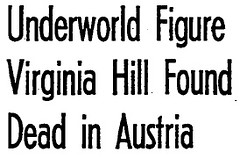
In March 1966, Virginia Hill’s body was found in a snow drift in Koppl, Austria.  She’d allegedly taken an overdose of sleeping pills.

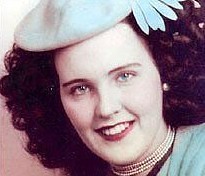
Oh, and before I forget – the last leap in my free association exercise led me to Elizabeth Short (aka the “Black Dahlia”).  Her bisected body was discovered in a vacant lot in Leimert Park on January 15, 1947.  Beth Short’s murder is arguably the most famous in Los Angeles’ history, and remains unsolved.
The reason I thought of Beth is simple, the 63rdanniversary of her murder is fast approaching; and as a tour guide for Esotouric, I’ll be a part of the “Real Black Dahlia” tour this coming Saturday, January 9th.  I’ll be reading from some of the letters that Beth carried in her suitcase, as well as giving a thumbnail personality sketch of her that I’ve developed based upon her choice of make-up.   For tour information visit Esotouric.com.


References:

  • 1. Time Magazine
  • 2. Los Angeles Times
  • 3. Wikipedia
  • 4. Tru TV Crime Library


For last year’s words belong to last year’s language And next year’s words await another voice. And to make an end is to make a beginning. ~ T.S. Eliot

Wishing you and yours the very best.

See you in 2010.


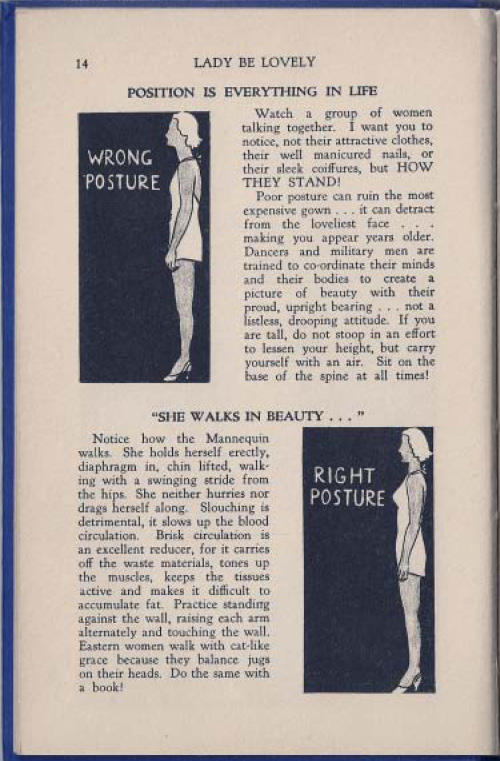
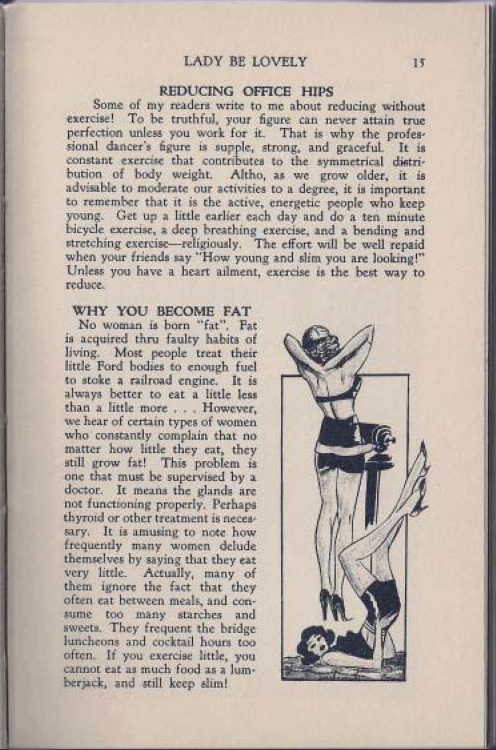
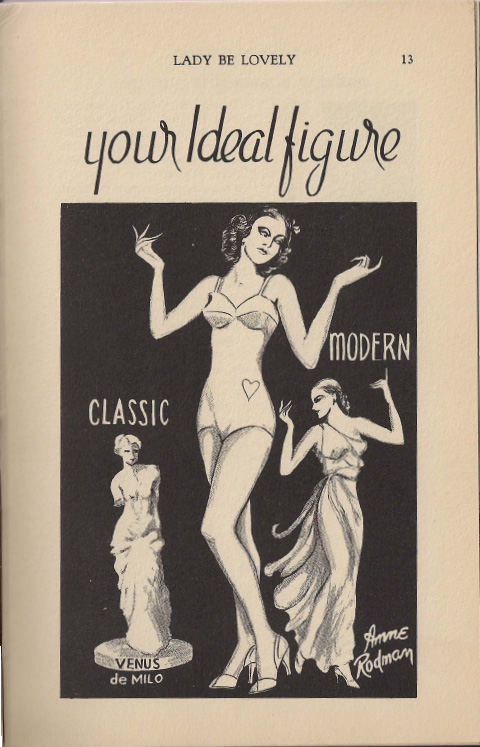
Okay, ladies, drop the bon-bons and step away from the extra helping of pie. I know, it’s holiday time and everyone seems to ignore their diets in favor of partying; but I don’t think that Anne Rodman, author of “Lady, Be Lovely, would approve.

Instead of packing on those extra 5-10 pounds this season, focus on your ideal figure and you will begin the new year svelte and gorgeous!

Here are a few tips for attaining, and maintaining, your ideal figure.


See, your mother was right — Stand Up Straight!


So, to sum up, don’t eat between meals, and beware those frequent bridge luncheons and cocktail hours! As Anne says, “…you cannot eat as a lumberjack, and still keep slim!”

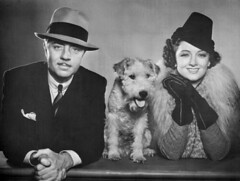
I’ve always wanted to be Nora Charles (as played by Myrna Loy). She was a sharp, classy (but not stuffy) dame who looked gorgeous and cracked wise. My marriage is pretty darned good — but Nick & Nora had a PERFECT marriage. The way that they interacted and shared adventures entertains me to this day.

Because we’re into the last weekend before Christmas, many of you will be out trying to finish your shopping; and that made me think of Nora Charles, her arms piled high with holiday packages, dragging along behind Asta (the cute-as-a-button terrier) as she made her grand entrance into the film “The Thin Man”.  As she attempted to collect herself after taking a tumble, Nora pulled a vanity case out of her handbag to check her makeup. She was a woman after my own heart.

Thinking of the Charles’ also made me crave a martini (well, in my case a gin gimlet).  In a little while I’m going to go and fix myself a cocktail, put my feet up, and watch Nick & Nora celebrate the holidays in their own inimitable style.

Happy bargain hunting! 

May you emerge from the “Black Friday” sales lovlier than ever!

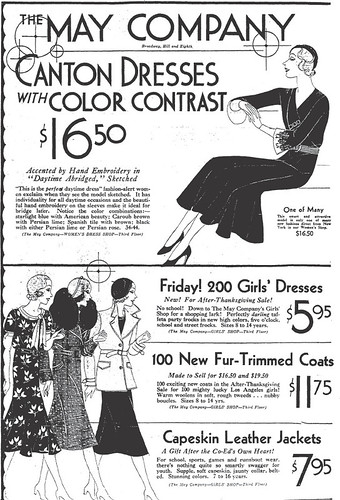
May Company ad - Los Angeles Times - November 26, 1931 --$16.50 = $234.67 in current USD.

Holiday parties are just around the corner.  If your face isn’t a perfect oval (few of us are so lucky) and you’re not sure how to identify the best hairstyle or makeup to enhance the shape of your face, watch and learn from this delightful tutorial from the 1940s.


Video is courtesy of the Prelinger Archive.

« Previous PageNext Page »