Wed 29 Jul, 2009
Beth Short’s Birthday
Comments (0) Filed under: EventsTags: 1940s, Black Dahlia, Elizabeth Short, Esotouric, murder, WWII
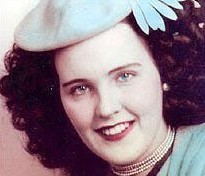
Beth Short
Beth Short (aka “The Black Dahlia”) would have been 85 years old today.
It’s difficult for me to imagine her as anything other than a lonely, melancholy, enigma of a girl trying to navigate the frequently treacherous streets of postwar Los Angeles searching for someone to take care of her. Someone to love. During the late 1940s there were countless numbers of girls like Beth who were trying to find their way to different dreams: Hollywood stardom for some, and for others a cottage with a white picket fence, a loving husband and beautiful children.
If anything, the mystery of her murder has deepened since January 15, 1947 when her body was discovered on a vacant lot in Leimert Park. Her killer has never been positively identified. There have always been theories, ranging from the ridiculous to the sublime. The truth is that we’ll never really know for certain who murdered her. But if we can’t bring her killer to justice, maybe the best we can do is to learn something of Beth’s life and by so doing, we can honor her memory.
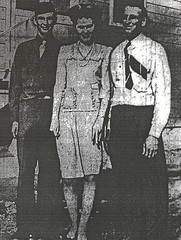
Beth at Camp Cooke
 Beth was one of thousands of young women who had flocked to Los Angeles during, and immediately following, WWII. There were good times to be had drinking and dancing with soliders, sailors and, Beth’s favorite, pilots. But the city was also a dark and dangerous place to be. Many of the former soliders returned to civilian life with demons that could not be vanquished with a bottle of beer or a spin on the dance floor with a lovely girl.
Because of my passion for vintage cosmetics and historic crime, I became interested in Beth’s makeup after reading comments made about her by one of her former roommates, Linda Rohr. Linda was 22 years old, and worked in the Rouge Room at Max Factor in Hollywood. When she was asked about Beth, Linda had said: “She had pretty blue eyes but sometimes I think she overdid with make-up an inch thick.” Linda went on to say that the effect of Beth’s makeup was startling, that she resembled a Geisha.
Makeup in the 1940s emphasized a natural look, and it seemed from Linda’s statement that Beth was applying her makeup contrary to the latest trends — something that women in their 20s seldom did. I began to wonder; what was Beth hiding? She wasn’t concealing a physical defect, she had lovely skin and as Linda had noted, pretty blue eyes. It struck me that Beth was subconciously using makeup as a mask — a way to keep the world at arm’s length and to become the character she needed to be in order to go out and hustle for drinks, dinner, or a place to stay.
 For more information and insights into Beth’s last couple of weeks in Los Angeles, including the REAL last place that she was seen alive (no, NOT the Biltmore Hotel) join me on Esotouric’s The Real Black Dahlia tour this Saturday, August 1, 2009. Kim Cooper will tell you about the news coverage of the case, especially as reported by legendary newswoman, Aggie Underwood. Richard Schave will have tales to tell, and I’ll expand upon my personality sketch of Beth. Our special guest, Marcie Morgan-Gilbert, will treat tour goers to a look at fashion from 1940s.
Esotouric is the Los Angeles based, family run, tour company that was founded by the husband and wife team Kim Cooper and Richard Schave.
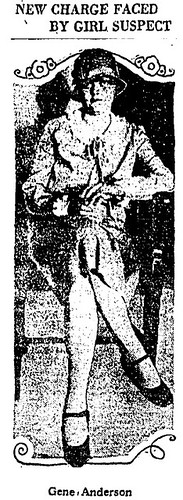 Twenty-four year old Gene Anderson was a lingerie designer , so she she took a particular interest in current fashion, and she loved to wear expensive clothes.
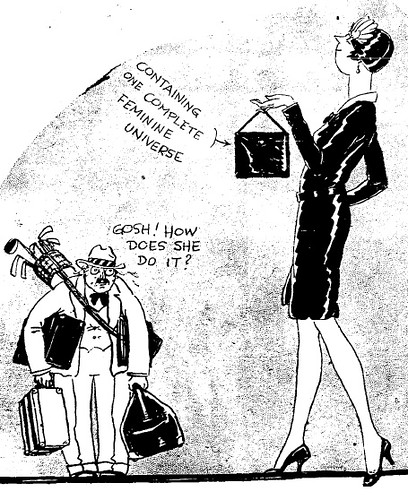 Upon being searched by a matron at the County Jail, it was discovered that Gene was packing a loaded revolver in her vanity bag!


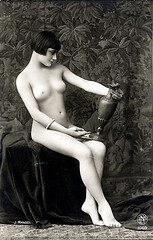
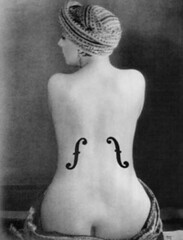
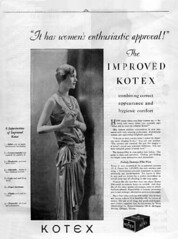
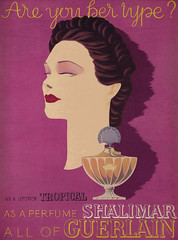

 Psychedelic art shared a similar aesthetic with its predecessor.
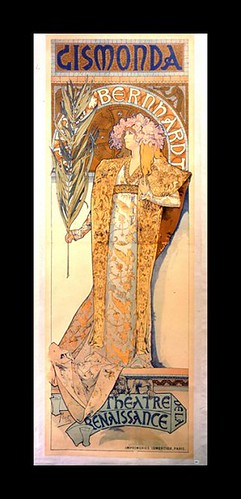 Even though it was Mucha who produced posters of the “Divine Sarah”, she may have had more in common with Aubrey Beardsley. Both of them were extreme personalities, flamboyant and eccentric. Beardsley expressed himself quite often by donning outlandish garments, and Bernhardt frequently slept in a coffin so that she could “better understand my tragic roles”.
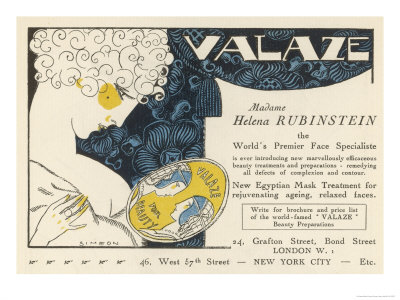
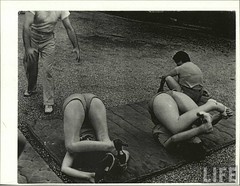 The desire to be beautiful isn’t new, but the way in which Arden and Rubinstein interpreted it was profoundly modern. They were advocating science for the formulation of beauty potions, and exercise for health. For instance, if you’ve spent any time at a spa, or if you belong to a gym, you can appreciate Elizabeth Arden’s whole-hearted endorsement of yoga. She credited her practice of yoga with having saved her from hip surgery and she offered classes at her Red Door salon. Helena Rubinstein did not exercise, but she was a canny observer of trends and introduced Rubinstein Rhythmics (exercise incorporating dance routines) at her salon.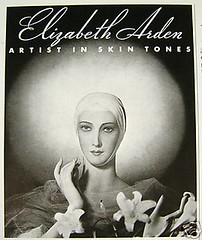

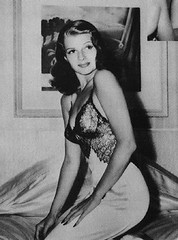
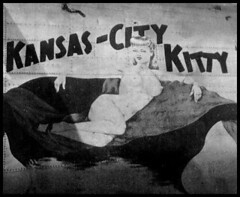
 While the women of the home front were keeping things on track, servicemen needed to be reminded why they were fighting, and what they were fighting for; and nothing sent a clearer message than a gorgeous pin-up picture.
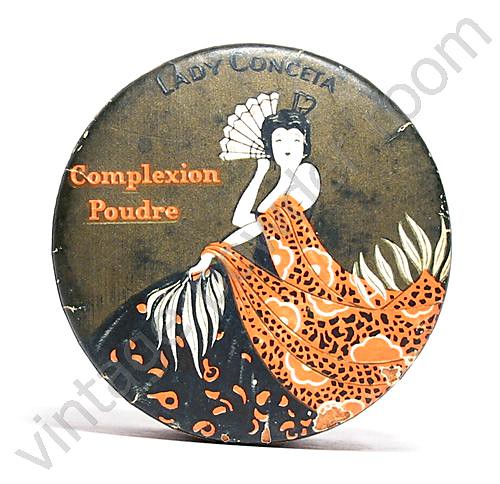

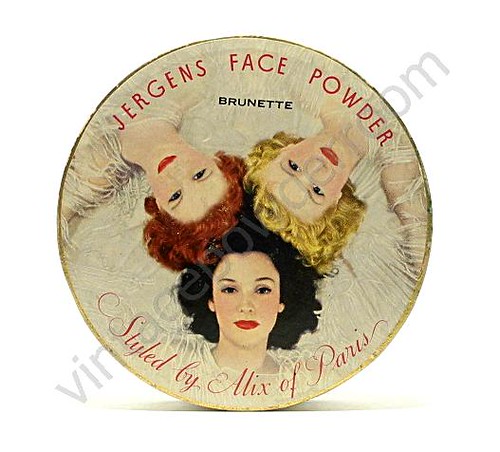
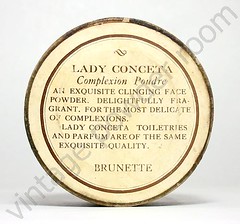 It’s also helpful to have a general knowledge of popular culture during different decades because the graphics on the box very often reflect popular themes of a specific era.

 Nearly every article written about Lupe described her as fiery, tempestuous, and the petite star did have a volatile personality. She was once at an airport, ready to board a flight, when she realized that her tickets had gone missing. She hurled her hat, handbag, and gloves to the tarmac and proceeded to stomp her hat into a pulp.
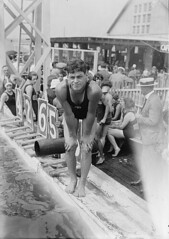 By early 1933 she was linked with Olympic champion swimmer, and star of “Tarzan, the Ape Man”, Johnny Weissmuller. On January 12th of that year she was quoted in the Los Angeles Times explaining that “Love is not for such as me, and anyone who says I am in love with Johnny Weissmuller is crazy”. It turned out that the rumors were true. Lupe and Johnny were married ten months later.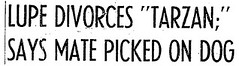
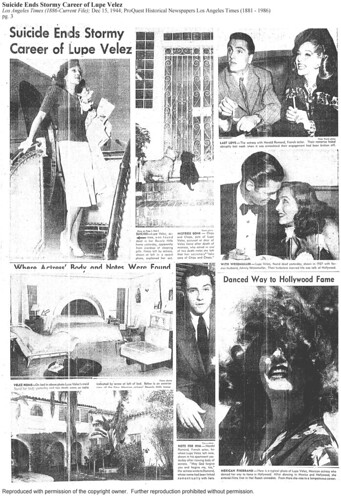 Lupe was pregnant with Harald’s child, and he was very reluctant to get married. It may have been his suggestion of a mock marriage that pushed Lupe over the edge. The note she left for him (which was reprinted in full in the papers) said as much. She wrote: “How could you Harald, fake such great love for me and our baby when all along you didn’t want us”.